
Alright folks, buckle up. Because this isn't just a history lesson, it's a...
2025-11-06 16 mars
The Pentagon's UFO disclosures, or UAPs as they're now called, should be earth-shattering. Videos of Tic Tac-shaped objects bouncing missiles? Claims of reverse-engineered alien tech? Mass panic seems the logical response. Yet, crickets. Why the collective yawn? This isn't a new phenomenon. The article points to a historical parallel: the 19th-century "discovery" of canals on Mars. It wasn't just some isolated crackpot theory. Millions bought into it.
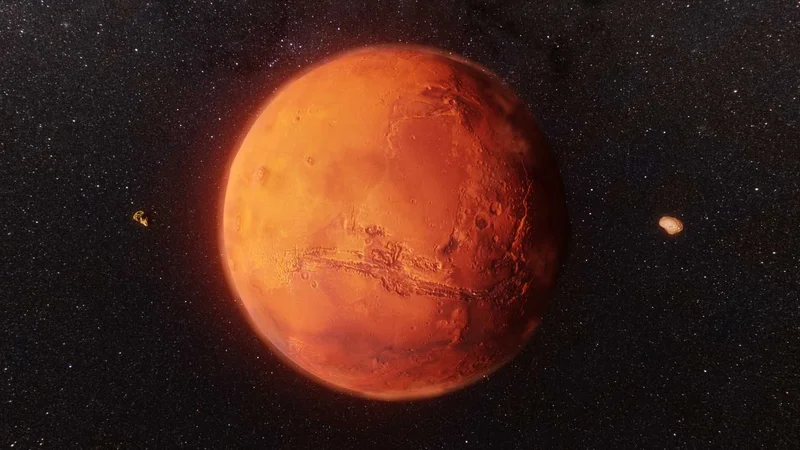
The article frames this as a lesson. It suggests we can understand our current blasé attitude towards UFOs by examining how a prior generation convinced themselves that Mars was crisscrossed by artificial waterways. It all started with the opposition of 1877, when Mars came unusually close to Earth. New telescopes allowed for unprecedented views of the red planet. Giovanni Schiaparelli, an Italian astronomer, observed what he called canali—channels. The English-speaking world translated this as "canals," implying artificial construction.
A key figure in popularizing the Martian canals was Percival Lowell. This wealthy heir built an observatory in Flagstaff, Arizona, and meticulously mapped hundreds of canals. He theorized that a dying Martian civilization had built them to transport water from the poles to the equator. Lowell became a celebrity, his books bestsellers, his lectures sold out. People even claimed to see the canals themselves with small telescopes.
But here's the thing: the canals weren't real. By the 1960s, robotic probes proved they were illusions, the result of dust storms and the human tendency to see patterns where none exist. So, what's the takeaway? The article suggests that the Martian canal craze reveals something fundamental about how we process extraordinary claims. It wasn’t just about scientific evidence; it was about the cultural and technological context of the time.
The article correctly points out that the 1877 opposition coincided with the rise of mass media. Newspapers were gaining access to telegraph lines, allowing for instant communication and sensationalized reporting. William Pickering, an astronomer at Harvard, used this to his advantage, sending dramatic (and possibly embellished) descriptions of Mars to The New York Herald. The newspaper, in turn, presented him as a heroic explorer, further fueling the Mars mania.
But I wonder, what role did industrialization play? Canals were a symbol of progress in the 19th century. (The Erie Canal, completed in 1825, transformed trade in the United States.) Perhaps people were predisposed to see canals on Mars because they were already seeing them on Earth. The article mentions extreme El Niño events that brought catastrophic droughts and famine to much of the world at the time. It suggests that the irrigation systems and ship canals had emerged as quintessential infrastructure projects of an industrializing world. As one essay puts it, In the late 1800s alien ‘engineers’ altered our world forever.
The article also explores the darker side of the Martian canal story. The idea of a dying civilization struggling to survive on a drying planet sparked a kind of existential dread. If Mars was doomed, what about Earth? This fear was amplified by H.G. Wells' The War of the Worlds, which depicted a Martian invasion of Earth. The article says this novel was a critique of British colonialism, but it also tapped into a deeper anxiety about the fate of humanity.
The claim that the Martian canals vindicated social Darwinists also needs more scrutiny. The article states that Lowell believed that the stronger Martians had survived to reengineer their planet, while the weak had perished. This is a simplistic interpretation of social Darwinism, which was often used to justify inequality and oppression. It’s worth noting that Schiaparelli, by contrast, thought the canals were a triumph of collective socialism, a whole-of-society response to a planetary catastrophe.
The article concludes by suggesting that the Martian canal story has lessons for today. It argues that our current blasé attitude towards UFOs is not surprising, given the cultural and technological changes of our time. The spread of conspiracy theories on social media, the commercialization of drones—these factors all shape how we interpret extraordinary claims.
It’s a compelling argument, but it also raises some questions. Are we really as indifferent to UFOs as the article suggests? Or is there a quiet fascination simmering beneath the surface? The article mentions that more than half of Americans believe that UFOs probably confirm the existence of intelligent alien life. That's a significant number. Are we simply better at compartmentalizing our anxieties than our 19th-century counterparts?
The Martian canal craze was a complex phenomenon, driven by a confluence of factors: scientific discovery, technological innovation, and cultural anxieties. The article argues that it's a cautionary tale, reminding us that extraordinary claims require extraordinary evidence, and that our perceptions are always shaped by our biases. But it also suggests that the pursuit of knowledge, even when it leads to dead ends, can have profound and lasting consequences. The article points out that astrobiology, the science that explores how life begins, survives and evolves in the Universe, is today a burgeoning discipline. It concludes that even if their work uncovers nothing, the history of the canals on Mars reveals that there are few enterprises more worth pursuing. And I find myself wondering if this isn't a bit too optimistic. Perhaps the real lesson is that we should be more skeptical, not just of extraordinary claims, but of our own ability to discern truth from illusion.
Tags: mars
Related Articles

Alright folks, buckle up. Because this isn't just a history lesson, it's a...
2025-11-06 16 mars