
Generated Title: Mars Mania: How a 19th-Century Delusion Reveals Our UFO Sh...
2025-11-05 15 mars
Alright folks, buckle up. Because this isn't just a history lesson, it's a sneak peek into our future!
You know, we're all buzzing about UFOs these days, right? The Pentagon's got videos, pilots are talking, and everyone’s wondering if we're about to get a cosmic house call. But here's the thing: this isn't the first time humanity has collectively tilted its head and squinted at the sky, wondering if someone—or something—is looking back.
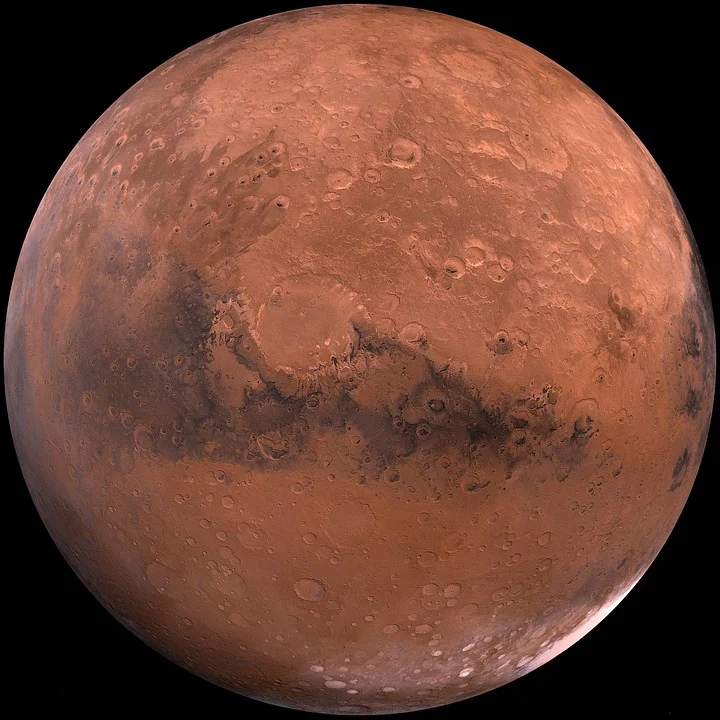
Back in the late 1800s, Mars was the UFO of its day. Astronomers, armed with brand-new telescopes, started seeing… canals. Canali, as the Italian astronomer Giovanni Schiaparelli called them. Now, Schiaparelli probably meant "channels," natural formations. But the English-speaking world ran with "canals," and suddenly, everyone was convinced Mars was crisscrossed with massive, artificial waterways.
Percival Lowell, a wealthy dude with a serious passion for Mars, jumped into the fray. He built an observatory in Flagstaff, Arizona, and mapped hundreds of these canals. His theory? Mars was drying out, and these canals were the work of a super-advanced civilization, desperately trying to irrigate their dying planet.
Think about that for a second. Imagine the sheer audacity of that idea! An entire planet, engineered on a scale we can barely fathom. It’s like imagining the entire Earth as one giant, interconnected farm, sustained by a network of canals stretching from pole to pole. It's mind-boggling.
And people bought it. Hook, line, and sinker. Newspapers ran wild with stories of Martian engineers, dying worlds, and desperate attempts at survival. It was a full-blown Martian mania.
Now, here's where it gets really interesting. This "discovery" of Martian canals didn't just happen in a vacuum. It happened during a time of massive technological and social upheaval. The Industrial Revolution was in full swing, empires were expanding, and newspapers were becoming powerful forces, shaping public opinion like never before.
The canals became a mirror reflecting humanity's own anxieties and aspirations. Some saw them as a testament to the power of technology to overcome environmental challenges. Others saw them as a warning about the dangers of unchecked industrialization and climate change. H.G. Wells even wrote The War of the Worlds, tapping into fears of Martian invasion.
It's wild to think about, isn't it? That an illusion—a trick of the light, a misinterpretation of data—could have such a profound impact on our world. It fueled scientific inquiry, inspired science fiction, and even shaped our understanding of our place in the cosmos. The search for canals even helped establish the importance of a steady atmosphere for astronomy, leading to the mountaintop observatories we use today!
Okay, so what's the big takeaway here? What does this Martian canal craze have to do with us, today, staring up at the sky and wondering about UFOs?
Well, it tells us that the discovery of extraterrestrial life isn't just a scientific event. It's a cultural event. It's shaped by our hopes, our fears, our technologies, and our social structures.
It also reminds us that the line between reality and illusion can be blurry. We see what we want to see, and we interpret what we see through the lens of our own experiences. It's like that old saying: "We don't see things as they are, we see them as we are."
So, as we continue to explore the universe and search for signs of life beyond Earth, let's remember the Martian canals. Let's remember that the most important discoveries aren't always the ones we make with our telescopes, but the ones we make about ourselves.
The article mentions how the canals helped to explain and justify why, even in the 19th century, ‘man has begun to leave his mark on this his globe in deforestation, in canalisation, in communication.’ Those Martian feats of planetary engineering hinted at humankind’s longer future: ‘[T]he time is coming when the earth will bear his imprint, and his alone. What he chooses, will survive; what he pleases, will lapse, and the landscape itself will become the carved object of his handiwork.’ This is the kind of breakthrough that reminds me why I got into this field in the first place. As explored in In the late 1800s alien ‘engineers’ altered our world forever, the idea of Martian engineering had a profound impact on society.
Here's a quote that I think perfectly encapsulates this sentiment: "The discovery of an alien civilization would destabilize society." Maybe. But maybe it will also unify us. Maybe it will force us to confront our shared challenges and work together to build a better future.
Which brings me to my final thought: What if the real aliens aren't out there, in the stars, but in here, inside ourselves? What if the greatest challenge we face isn't finding extraterrestrial life, but learning to live together, peacefully and sustainably, on this one precious planet we call home?
That's a question worth pondering, don't you think? And it's a question that will shape our future, regardless of whether we ever make contact with aliens.
Tags: mars
Related Articles
Generated Title: Mars Mania: How a 19th-Century Delusion Reveals Our UFO Sh...
2025-11-05 15 mars